
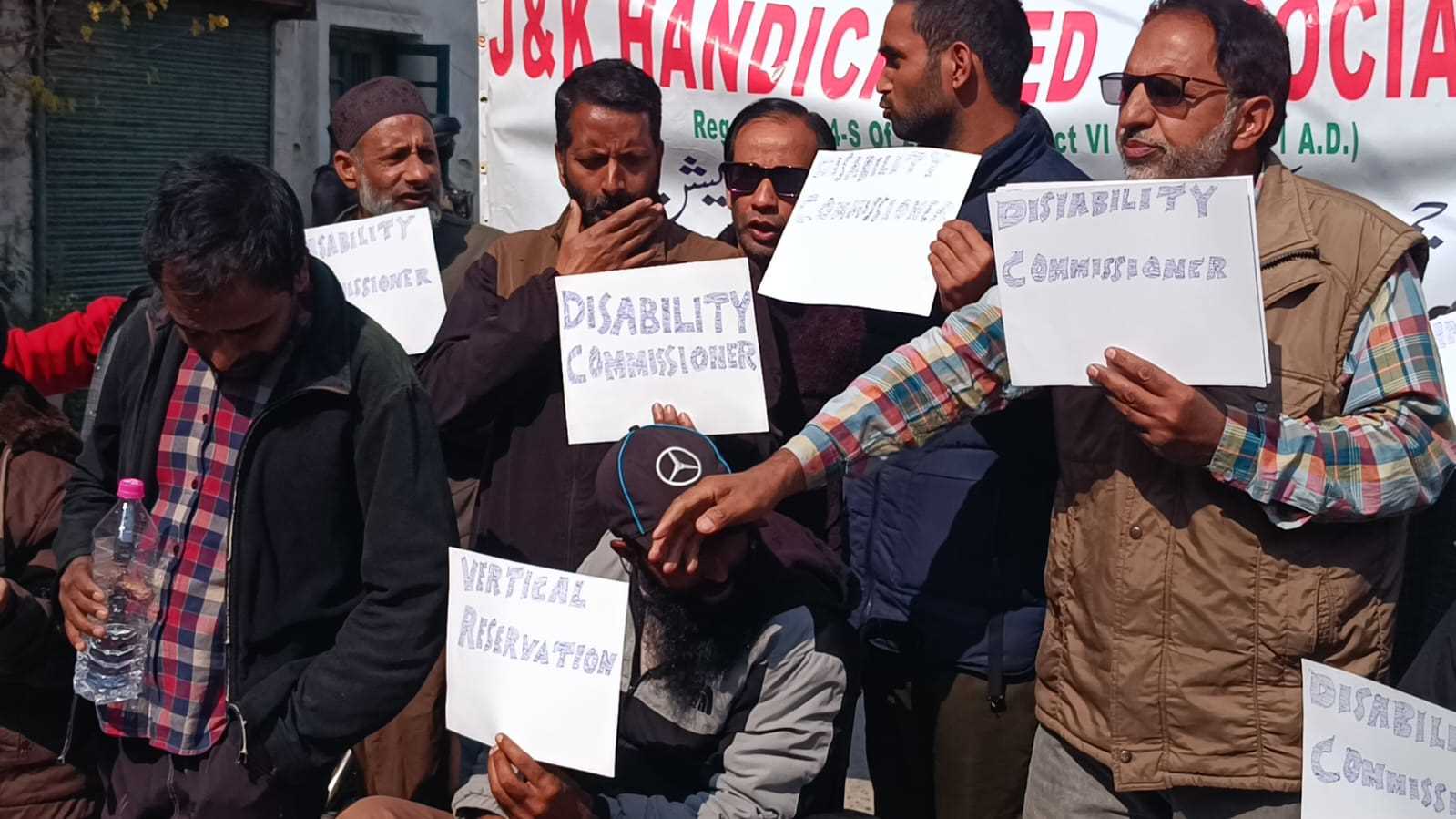
During the protest, the Association demanded the immediate appointment of a Disability Commissioner, stating that the position had remained vacant for nearly 18 months, weakening the institutional mechanism for safeguarding the rights and interests of persons with disabilities.
The protesters called for the effective implementation of the Rights of Persons with Disabilities Act, 2016, across Jammu and Kashmir. They also sought a special recruitment drive for qualified persons with disabilities and an increase in the monthly pension from Rs 1,250 to Rs 3,000. Other demands included the enforcement of reservation provisions in government and semi-government jobs, 4 per cent reservation in promotions and transfers for employees with disabilities, and the re-advertisement of unfilled vacancies dating back to 1998.
The Association also stressed the need to ensure greater participation of persons with disabilities in governance and public decision-making. It sought representation in the Jammu and Kashmir Legislative Assembly, municipal bodies, panchayats, district development meetings and government committees, arguing that their concerns must be considered while framing policies and planning development initiatives.
Highlighting educational challenges, the Association called for improved accessibility in schools, colleges and universities, along with better reservation opportunities for students with disabilities. It demanded accessible textbooks and digital learning platforms, as well as the establishment of Braille schools in every district to improve educational access for visually impaired students.
The protesters also sought disability-friendly infrastructure across Jammu and Kashmir, including accessible roads, bridges, parking facilities, government offices and banking institutions. They called for dedicated service counters for persons with disabilities in government and semi-government offices and banks to ensure easier access to essential services.
Among its economic demands, the Association sought low-interest loans, subsidies, employment opportunities under MGNREGA and other government schemes, exemption from job application fees and tax concessions. It also demanded at least 4 per cent reservation for persons with disabilities in shopping complexes and plots developed by government departments.
On social welfare, the Association called for comprehensive health insurance coverage, free medical treatment and a 50 per cent concession on electricity and water charges. It further sought the establishment of advisory bodies to ensure that disability-related concerns receive due consideration in government policies. Making official websites and mobile applications accessible to persons with disabilities was another key demand.
The Association urged the government to replace repeated assurances with concrete and time-bound action. It maintained that persons with disabilities must have equal opportunities in education, employment, healthcare and public services, alongside meaningful participation in decision-making processes.
The protesters said addressing these demands was essential to protecting the dignity, independence and equal rights of persons with disabilities throughout Jammu and Kashmir.

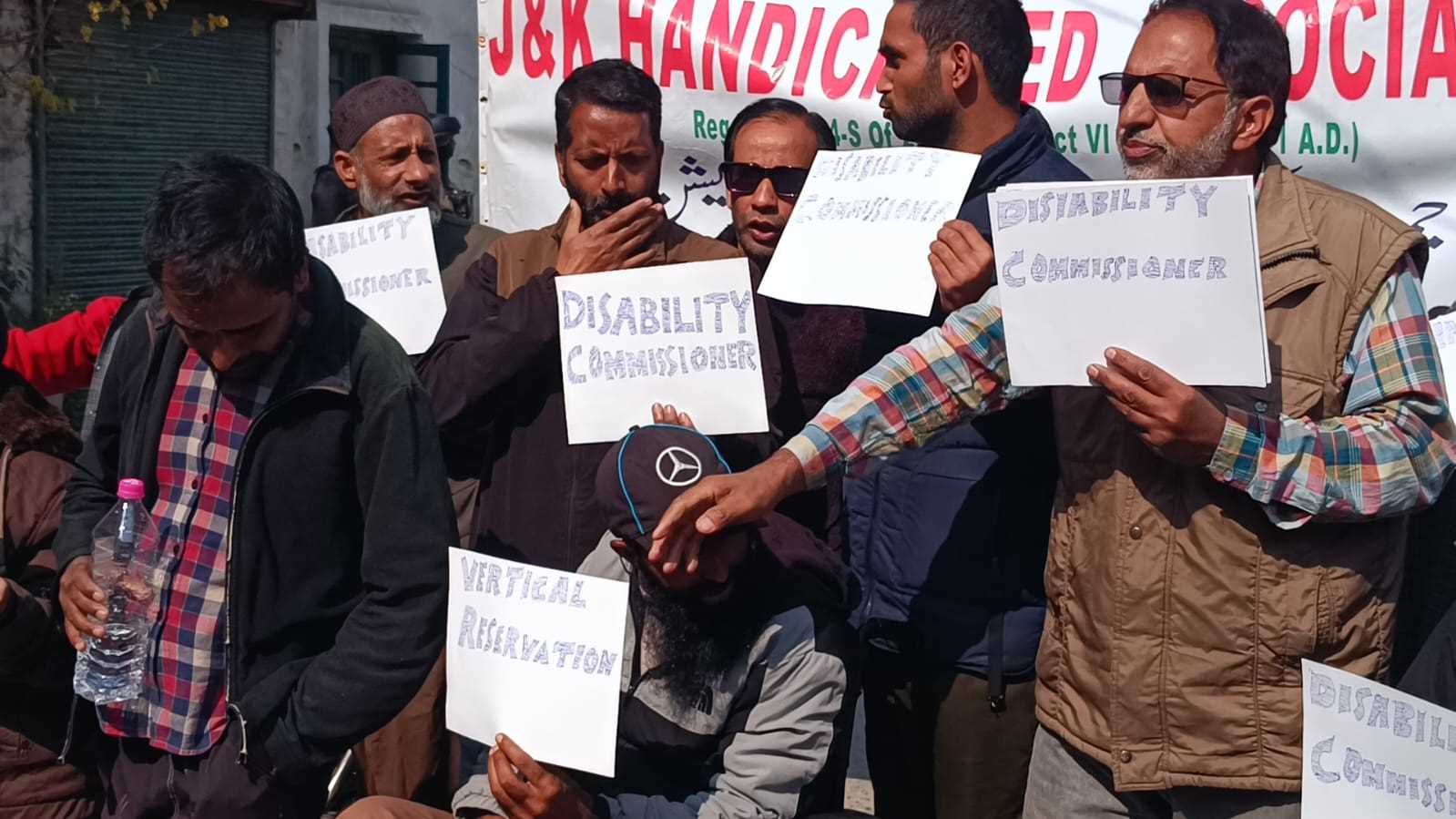
During the protest, the Association demanded the immediate appointment of a Disability Commissioner, stating that the position had remained vacant for nearly 18 months, weakening the institutional mechanism for safeguarding the rights and interests of persons with disabilities.
The protesters called for the effective implementation of the Rights of Persons with Disabilities Act, 2016, across Jammu and Kashmir. They also sought a special recruitment drive for qualified persons with disabilities and an increase in the monthly pension from Rs 1,250 to Rs 3,000. Other demands included the enforcement of reservation provisions in government and semi-government jobs, 4 per cent reservation in promotions and transfers for employees with disabilities, and the re-advertisement of unfilled vacancies dating back to 1998.
The Association also stressed the need to ensure greater participation of persons with disabilities in governance and public decision-making. It sought representation in the Jammu and Kashmir Legislative Assembly, municipal bodies, panchayats, district development meetings and government committees, arguing that their concerns must be considered while framing policies and planning development initiatives.
Highlighting educational challenges, the Association called for improved accessibility in schools, colleges and universities, along with better reservation opportunities for students with disabilities. It demanded accessible textbooks and digital learning platforms, as well as the establishment of Braille schools in every district to improve educational access for visually impaired students.
The protesters also sought disability-friendly infrastructure across Jammu and Kashmir, including accessible roads, bridges, parking facilities, government offices and banking institutions. They called for dedicated service counters for persons with disabilities in government and semi-government offices and banks to ensure easier access to essential services.
Among its economic demands, the Association sought low-interest loans, subsidies, employment opportunities under MGNREGA and other government schemes, exemption from job application fees and tax concessions. It also demanded at least 4 per cent reservation for persons with disabilities in shopping complexes and plots developed by government departments.
On social welfare, the Association called for comprehensive health insurance coverage, free medical treatment and a 50 per cent concession on electricity and water charges. It further sought the establishment of advisory bodies to ensure that disability-related concerns receive due consideration in government policies. Making official websites and mobile applications accessible to persons with disabilities was another key demand.
The Association urged the government to replace repeated assurances with concrete and time-bound action. It maintained that persons with disabilities must have equal opportunities in education, employment, healthcare and public services, alongside meaningful participation in decision-making processes.
The protesters said addressing these demands was essential to protecting the dignity, independence and equal rights of persons with disabilities throughout Jammu and Kashmir.

© Copyright 2023 brighterkashmir.com All Rights Reserved. Quantum Technologies