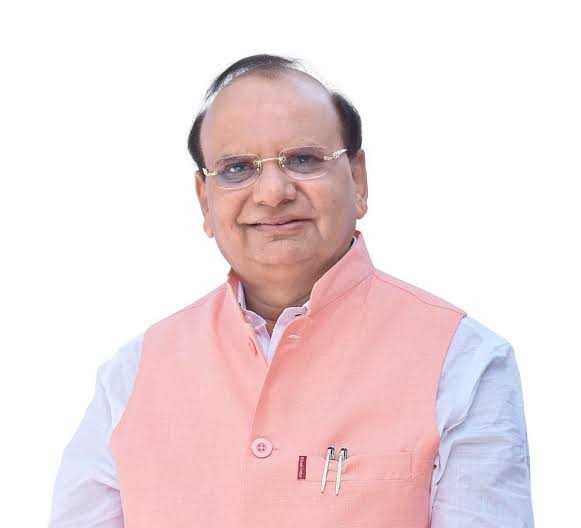
Kargil, October 16: Ladakh Lieutenant Governor Vinai Kumar Saxena has announced the creation of Sankoo as a new district, fulfilling a long-standing demand of residents seeking improved access to government services and better administrative facilities.
The announcement was made during a public rally in Sankoo, where the Lieutenant Governor said the decision aligned with Prime Minister Narendra Modi’s vision of “Sabka Saath, Sabka Vikas”.
Saxena acknowledged the contributions of Anjuman-e-Sahib Zaman, led by Chief Patron Syed Mohammad Razvi, also known as Aga Migi Outh, and Chairman Sheikh Sadiq Balaghi. He also recognised the efforts of Dr Jaffer Akhoon, Chairman and Chief Executive Councillor of the Ladakh Autonomous Hill Development Council (LAHDC), Kargil, Member of Parliament Mohammad Haneefa Jan, and former CEC Tashi Gyalson.
Congratulating those associated with the campaign, the Lieutenant Governor described the decision as an important step towards fulfilling the aspirations of the people of Sankoo and its surrounding areas.
The demand for a separate district has gained momentum over the years, with residents and local representatives highlighting the region’s geographical spread, population and distance from existing administrative headquarters. They have argued that district status would bring government services closer to the people and improve the delivery of public welfare schemes.
Earlier this year, a delegation from Kargil met Union Home Minister Amit Shah and sought the creation of Sankoo and Shakar-Chiktan districts as part of Ladakh’s proposed administrative reorganisation.
Ladakh had previously announced five new districts, namely Sham, Nubra, Changthang, Zanskar and Drass, in April 2026. The creation of Sankoo marks the sixth new district announced under the reorganisation initiative.
Once formally notified and made operational, Sankoo would take Ladakh’s total number of districts to eight, marking a significant change in the region’s administrative structure.

Kargil, October 16: Ladakh Lieutenant Governor Vinai Kumar Saxena has announced the creation of Sankoo as a new district, fulfilling a long-standing demand of residents seeking improved access to government services and better administrative facilities.
The announcement was made during a public rally in Sankoo, where the Lieutenant Governor said the decision aligned with Prime Minister Narendra Modi’s vision of “Sabka Saath, Sabka Vikas”.
Saxena acknowledged the contributions of Anjuman-e-Sahib Zaman, led by Chief Patron Syed Mohammad Razvi, also known as Aga Migi Outh, and Chairman Sheikh Sadiq Balaghi. He also recognised the efforts of Dr Jaffer Akhoon, Chairman and Chief Executive Councillor of the Ladakh Autonomous Hill Development Council (LAHDC), Kargil, Member of Parliament Mohammad Haneefa Jan, and former CEC Tashi Gyalson.
Congratulating those associated with the campaign, the Lieutenant Governor described the decision as an important step towards fulfilling the aspirations of the people of Sankoo and its surrounding areas.
The demand for a separate district has gained momentum over the years, with residents and local representatives highlighting the region’s geographical spread, population and distance from existing administrative headquarters. They have argued that district status would bring government services closer to the people and improve the delivery of public welfare schemes.
Earlier this year, a delegation from Kargil met Union Home Minister Amit Shah and sought the creation of Sankoo and Shakar-Chiktan districts as part of Ladakh’s proposed administrative reorganisation.
Ladakh had previously announced five new districts, namely Sham, Nubra, Changthang, Zanskar and Drass, in April 2026. The creation of Sankoo marks the sixth new district announced under the reorganisation initiative.
Once formally notified and made operational, Sankoo would take Ladakh’s total number of districts to eight, marking a significant change in the region’s administrative structure.
© Copyright 2023 brighterkashmir.com All Rights Reserved. Quantum Technologies