The imams of today cannot remain disconnected from the realities confronting society. Young people are struggling with addiction, unemployment, loneliness, misinformation and a crisis of purpose. Violence is tearing our social fabric apart and families face changing social pressures. Women continue to seek dignity, security and equal opportunity. Communities are often divided by suspicion and political rhetoric.
Interaction
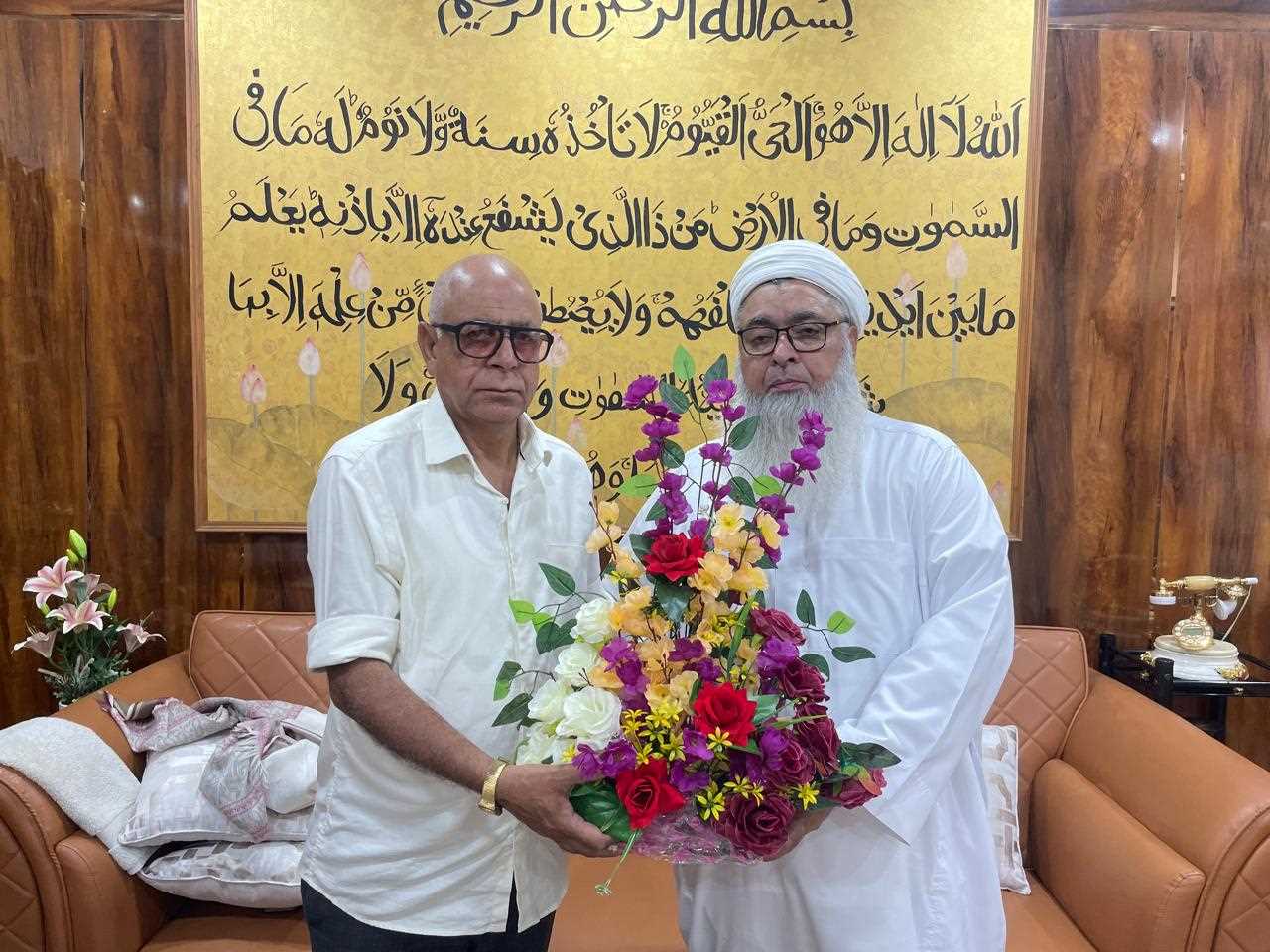
Most meetings end when the conversation ends. However, a few do stay with you long after the farewell, and my interaction with Chief Imam of the All India Imam Organisation Dr Umair Ahmed Ilyasi was one such encounter.
What impressed me was not simply his position as a religious scholar, but the amazing range of his outlook. He spoke about faith without isolation, religion without rigidity and patriotism without hostility. His conversation moved naturally from the Quran and Hadith to society, young people, national responsibility and the larger question of humanity.
For me, it was more than a conversation-it was an eye-opener.
Dr Ilyasi represents a form of religious leadership that recognises that true strength of faith lies not merely in its knowledge, but in how that knowledge is translated into human conduct. A scholar may possess command over scriptures, but the greater challenge is to convert its moral teachings into compassion, justice, humility and service.
The Quran places great emphasis on justice, mercy, truth and human dignity. The life of Prophet Muhammad (PBUH) offers enduring lessons in compassion, forgiveness, coexistence and fairness. These principles cannot remain confined to books or places of worship. They must find expression in everyday life.
That is where the role of a religious leader becomes particularly important.
Beyond the Pulpit
The imams of today cannot remain disconnected from the realities confronting society. Young people are struggling with addiction, unemployment, loneliness, misinformation and a crisis of purpose. Violence is tearing our social fabric apart and families face changing social pressures. Women continue to seek dignity, security and equal opportunity. Communities are often divided by suspicion and political rhetoric.
Religious leadership has the ability to address these challenges—not through fear or condemnation, but through wisdom and moral guidance.
A sermon can provide inner strength and encourage a young person to abandon drugs. It can persuade parents to educate their daughters. It can strengthen family bonds. It can teach honesty in business, respect for women, compassion towards the vulnerable and responsibility towards society.
The pulpit, therefore, can become an instrument of social reform.
Faith Must Unite
One of the strongest impressions during my interaction with Dr Ilyasi was his emphasis on coexistence.
India is home to diverse faiths, languages, cultures and traditions. Differences are an undeniable reality of our society, but difference need not become division. The challenge before religious leaders is therefore not to make everyone think alike-it’s to teach people how to disagree without hatred and coexist without fear.
Dr Ilyasi's engagement with interfaith dialogue reflects this broader approach. His participation in Buddhist-Muslim dialogue initiatives and his public advocacy of harmony underline the possibility of religious identity becoming a bridge rather than a barrier.This is a message India needs—and indeed, a message the world needs.
Religion should never be used to manufacture hatred between neighbours; faith should never become an excuse for violence. And no community should be asked to carry the burden of crimes committed by individuals or organisations acting in its name. Islam, like every great faith cannot be held hostage to actions of extremists who distort religion for political or violent purposes.
Message Beyond Borders
The relevance of such a message extends far beyond India. The world is witnessing wars, extremism, polarisation, religious intolerance and an unprecedented deluge of misinformation. Anger travels instantly; wisdom often takes time. In such an environment, religious leaders have a profound responsibility. Some realities of today:
A microphone can inflame or heal.
A sermon can deepen prejudice or challenge it.
A religious leader can close minds or open hearts.
The choice carries consequences. The world does not need louder religion-it needs a wiser one—a religious leadership that understands scripture as a source of moral responsibility rather than a weapon of division.
India's Civilisational Message
India's constitutional and civilisational framework provides space for people of different faiths to live together while retaining their individual identities. The task before religious leadership is therefore not to promote differences but cultivate mutual respect and hence Dr Ilyasi's message of harmony and national unity acquires significance in this context. Faith and citizenship need not stand against each other. A person can remain deeply committed to his or her religion while respecting the faith, dignity and rights of others.
Patriotism too should not be confused with hostility towards another nation or community .
True patriotism is responsibility towards one's own society.
A Word for Kashmir
For Kashmir, this message carries special meaning. The Valley possesses a deep spiritual inheritance shaped by Sufi saints, scholars and traditions that placed compassion, humility and human fellowship at the heart of religious life. Kashmir's future cannot be built merely through political arguments. It must also be strengthened through education, employment, social responsibility, moral leadership and hope for the younger generation.
Our religious institutions can contribute significantly to that effort. They can become centers of awareness against drugs and violence. They can encourage education and social service. They can promote respect for women and the elderly. They can teach young people that disagreement should not breed enmity and that faith does not demand hatred.
Above all, they can remind society that humanity comes before hostility.
The Pakistan Question
No discussion about peace in South Asia can ignore the difficult relationship between India and Pakistan.
India has repeatedly raised concerns over cross-border terrorism and militant violence. At the same time, criticism of state policies and militant organisations must never be transformed into hostility towards ordinary Pakistani citizens as many of whom have themselves suffered from violence and instability.
The region needs a future in which people are not held captive by perpetual confrontation. There can be disagreements over politics, territory and national interests. But no political disagreement can justify violence against innocent people. Peace does not mean ignoring difficult questions. It means finding ways to address them without sacrificing human life.
South Asia deserves a future beyond suspicion, terrorism and permanent hostility.
Lesson I Carry
My interaction with Dr Umair Ilyasi left me with a simple but profound thought: the value of religious scholarship ultimately lies in the character it creates. I also realised that :
The world needs scholars who can understand scripture and society. It needs imams who can speak to the believer's heart and the citizen's conscience.
It needs religious leadership that rejects terrorism, discourages hatred, promotes dialogue and places human dignity at the centre of public life.
For me, the encounter was a reminder that faith is not meant to build walls around humanity.
It is meant to elevate humanity and faith should make us humble, not hateful. Religion should make us compassionate, not cruel. Patriotism should make us responsible, not hostile and leadership should build bridges where fear has built walls.
That is the message I carried from my conversation with Dr Umair Ahmed Ilyasi. It taught me that the world belongs not to one community alone, but to all of us. Let faith therefore become a bridge and let dialogue replace hatred. Let justice guide power and let humanity remain greater than every division created in its name.
Email:----------farooqwani61@yahoo.co.in

The imams of today cannot remain disconnected from the realities confronting society. Young people are struggling with addiction, unemployment, loneliness, misinformation and a crisis of purpose. Violence is tearing our social fabric apart and families face changing social pressures. Women continue to seek dignity, security and equal opportunity. Communities are often divided by suspicion and political rhetoric.
Interaction
Most meetings end when the conversation ends. However, a few do stay with you long after the farewell, and my interaction with Chief Imam of the All India Imam Organisation Dr Umair Ahmed Ilyasi was one such encounter.
What impressed me was not simply his position as a religious scholar, but the amazing range of his outlook. He spoke about faith without isolation, religion without rigidity and patriotism without hostility. His conversation moved naturally from the Quran and Hadith to society, young people, national responsibility and the larger question of humanity.
For me, it was more than a conversation-it was an eye-opener.
Dr Ilyasi represents a form of religious leadership that recognises that true strength of faith lies not merely in its knowledge, but in how that knowledge is translated into human conduct. A scholar may possess command over scriptures, but the greater challenge is to convert its moral teachings into compassion, justice, humility and service.
The Quran places great emphasis on justice, mercy, truth and human dignity. The life of Prophet Muhammad (PBUH) offers enduring lessons in compassion, forgiveness, coexistence and fairness. These principles cannot remain confined to books or places of worship. They must find expression in everyday life.
That is where the role of a religious leader becomes particularly important.
Beyond the Pulpit
The imams of today cannot remain disconnected from the realities confronting society. Young people are struggling with addiction, unemployment, loneliness, misinformation and a crisis of purpose. Violence is tearing our social fabric apart and families face changing social pressures. Women continue to seek dignity, security and equal opportunity. Communities are often divided by suspicion and political rhetoric.
Religious leadership has the ability to address these challenges—not through fear or condemnation, but through wisdom and moral guidance.
A sermon can provide inner strength and encourage a young person to abandon drugs. It can persuade parents to educate their daughters. It can strengthen family bonds. It can teach honesty in business, respect for women, compassion towards the vulnerable and responsibility towards society.
The pulpit, therefore, can become an instrument of social reform.
Faith Must Unite
One of the strongest impressions during my interaction with Dr Ilyasi was his emphasis on coexistence.
India is home to diverse faiths, languages, cultures and traditions. Differences are an undeniable reality of our society, but difference need not become division. The challenge before religious leaders is therefore not to make everyone think alike-it’s to teach people how to disagree without hatred and coexist without fear.
Dr Ilyasi's engagement with interfaith dialogue reflects this broader approach. His participation in Buddhist-Muslim dialogue initiatives and his public advocacy of harmony underline the possibility of religious identity becoming a bridge rather than a barrier.This is a message India needs—and indeed, a message the world needs.
Religion should never be used to manufacture hatred between neighbours; faith should never become an excuse for violence. And no community should be asked to carry the burden of crimes committed by individuals or organisations acting in its name. Islam, like every great faith cannot be held hostage to actions of extremists who distort religion for political or violent purposes.
Message Beyond Borders
The relevance of such a message extends far beyond India. The world is witnessing wars, extremism, polarisation, religious intolerance and an unprecedented deluge of misinformation. Anger travels instantly; wisdom often takes time. In such an environment, religious leaders have a profound responsibility. Some realities of today:
A microphone can inflame or heal.
A sermon can deepen prejudice or challenge it.
A religious leader can close minds or open hearts.
The choice carries consequences. The world does not need louder religion-it needs a wiser one—a religious leadership that understands scripture as a source of moral responsibility rather than a weapon of division.
India's Civilisational Message
India's constitutional and civilisational framework provides space for people of different faiths to live together while retaining their individual identities. The task before religious leadership is therefore not to promote differences but cultivate mutual respect and hence Dr Ilyasi's message of harmony and national unity acquires significance in this context. Faith and citizenship need not stand against each other. A person can remain deeply committed to his or her religion while respecting the faith, dignity and rights of others.
Patriotism too should not be confused with hostility towards another nation or community .
True patriotism is responsibility towards one's own society.
A Word for Kashmir
For Kashmir, this message carries special meaning. The Valley possesses a deep spiritual inheritance shaped by Sufi saints, scholars and traditions that placed compassion, humility and human fellowship at the heart of religious life. Kashmir's future cannot be built merely through political arguments. It must also be strengthened through education, employment, social responsibility, moral leadership and hope for the younger generation.
Our religious institutions can contribute significantly to that effort. They can become centers of awareness against drugs and violence. They can encourage education and social service. They can promote respect for women and the elderly. They can teach young people that disagreement should not breed enmity and that faith does not demand hatred.
Above all, they can remind society that humanity comes before hostility.
The Pakistan Question
No discussion about peace in South Asia can ignore the difficult relationship between India and Pakistan.
India has repeatedly raised concerns over cross-border terrorism and militant violence. At the same time, criticism of state policies and militant organisations must never be transformed into hostility towards ordinary Pakistani citizens as many of whom have themselves suffered from violence and instability.
The region needs a future in which people are not held captive by perpetual confrontation. There can be disagreements over politics, territory and national interests. But no political disagreement can justify violence against innocent people. Peace does not mean ignoring difficult questions. It means finding ways to address them without sacrificing human life.
South Asia deserves a future beyond suspicion, terrorism and permanent hostility.
Lesson I Carry
My interaction with Dr Umair Ilyasi left me with a simple but profound thought: the value of religious scholarship ultimately lies in the character it creates. I also realised that :
The world needs scholars who can understand scripture and society. It needs imams who can speak to the believer's heart and the citizen's conscience.
It needs religious leadership that rejects terrorism, discourages hatred, promotes dialogue and places human dignity at the centre of public life.
For me, the encounter was a reminder that faith is not meant to build walls around humanity.
It is meant to elevate humanity and faith should make us humble, not hateful. Religion should make us compassionate, not cruel. Patriotism should make us responsible, not hostile and leadership should build bridges where fear has built walls.
That is the message I carried from my conversation with Dr Umair Ahmed Ilyasi. It taught me that the world belongs not to one community alone, but to all of us. Let faith therefore become a bridge and let dialogue replace hatred. Let justice guide power and let humanity remain greater than every division created in its name.
Email:----------farooqwani61@yahoo.co.in
© Copyright 2023 brighterkashmir.com All Rights Reserved. Quantum Technologies